Template vs Custom-Built: What You're Really Paying For
When comparing a template vs custom website, let us start by conceding an honest point: good templates exist. A well-optimised premium template can genuinely match a custom build on raw page speed in 2026. If speed was the only metric that mattered, the argument for custom design would be much harder to make. But raw speed was never really the argument. What you are actually paying for when you commission a custom site is uniqueness, ownership, long-term flexibility, and a lower total cost over time.
The Cost of Shared Property
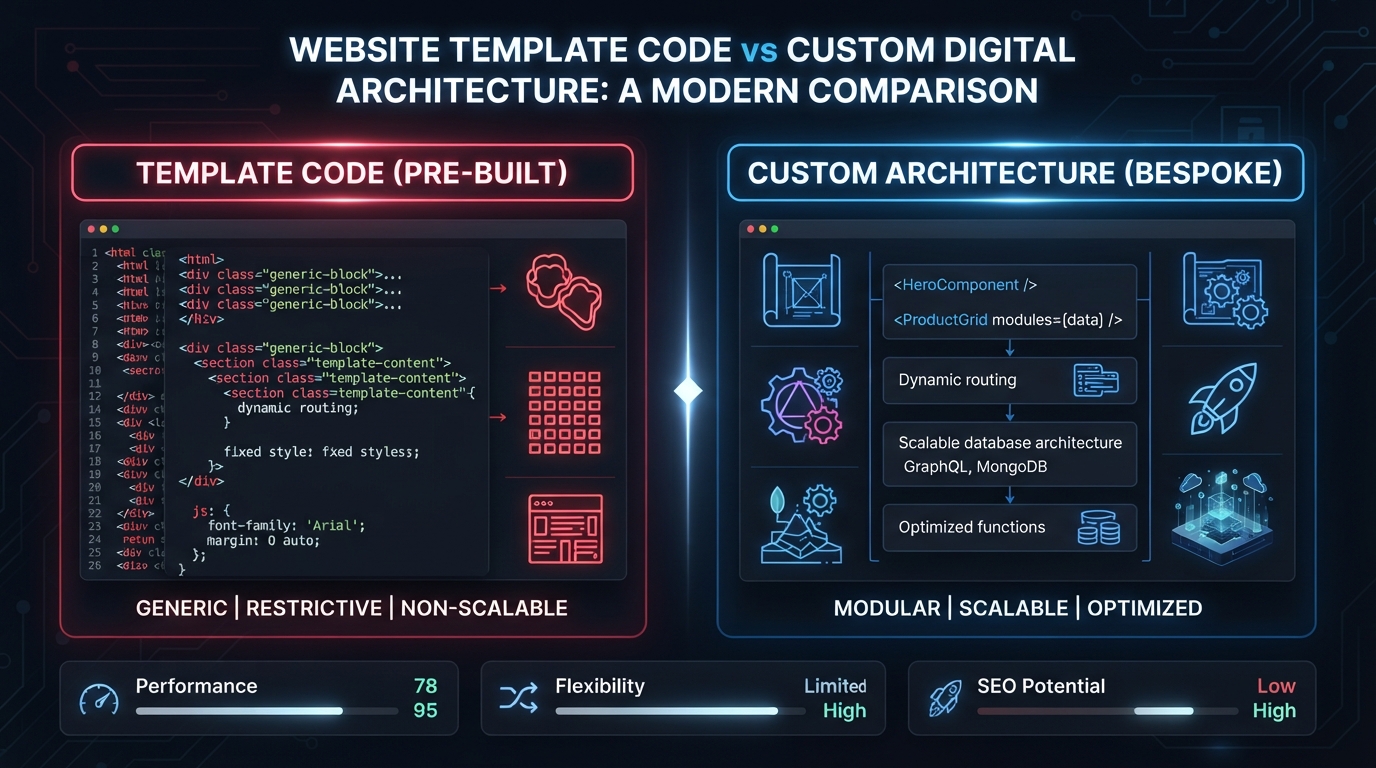
Template designs are sold to and reused by many businesses at once. When you buy an off-the-shelf layout, you are renting a shared aesthetic. It is not uncommon for two competing businesses in the same local area to end up with visually near-identical layouts. This immediately undermines credibility for both brands. A custom build ensures your digital presence is entirely your own, designed specifically around your value proposition rather than forcing your content into pre-defined boxes.
The Hidden Weight of Unused Code
While a template can be fast, it almost always carries hidden technical debt. Templates commonly ship with unused CSS, JavaScript, and plugin code that the business never uses, designed to accommodate every possible layout variation a buyer might want. This adds unnecessary weight to the page. Every additional 10 seconds of load time roughly doubles your bounce rate, and a one-second delay in page load time can reduce conversions by roughly 7-16%, depending on the industry. You are paying a conversion penalty for features you do not even use.
Total Cost Over Time
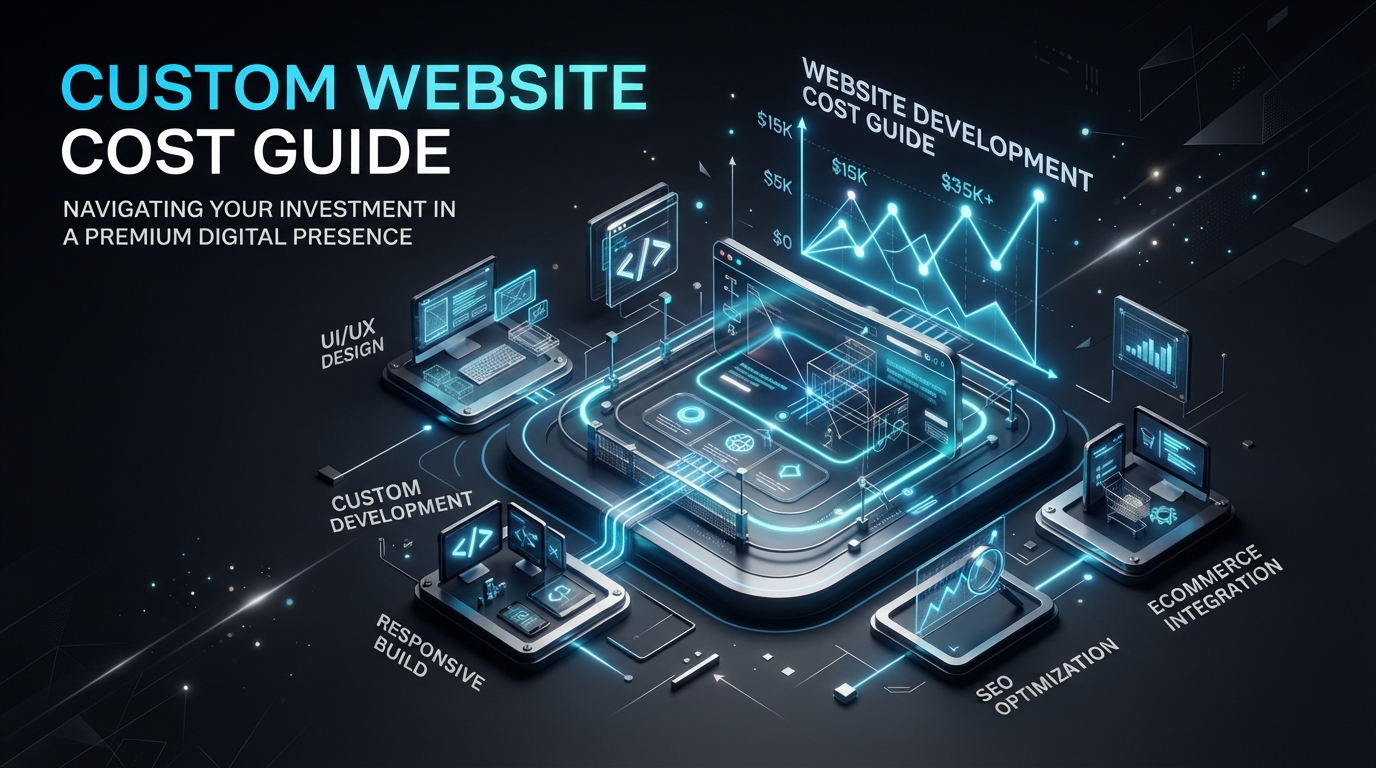
The upfront price of a template is undeniably attractive, but the long-term economics often tell a different story. Businesses on template platforms frequently need a redesign or platform migration within a year or two as their needs outgrow the template's rigid structure. The cost of migrating away from a template and rebuilding later frequently exceeds what a custom build would have cost upfront. Custom builds typically carry a higher initial investment but offer a significantly lower total cost of ownership over a 5-year view.
The Ongoing Security Risk
Template sites depend entirely on the original theme or plugin developer's ongoing support. If that developer decides to abandon the project or stops releasing updates, your foundation crumbles. When that support lapses, the business inherits unpatched security vulnerabilities with no easy fix. A custom site built on clean, standard code does not rely on a fragile ecosystem of third-party plugins just to keep the lights on.
What Custom Actually Buys You
When you invest in a custom build, you are buying full control over the site's structure and SEO fundamentals, including proper schema markup, logical URL structures, and strategic internal linking. 2026 industry data shows that personalised, custom-built experiences yield roughly 10-25% higher conversion rates than generic template experiences for service and e-commerce businesses. You can review our Process & Pricing page to see exactly how we architect these high-converting foundations from scratch.
An Honest Recommendation
Templates are a perfectly reasonable choice for testing a very early idea on a tight budget. If you are just starting out and need a digital placeholder, a template makes sense. However, once your brand, growth, and conversion rates genuinely matter to your bottom line, a custom build becomes a necessary investment. If you are ready to graduate from generic layouts to a site that actually drives revenue, contact our team to discuss your project.
SEO Metadata (For Reference)
Meta Title: Template vs Custom Website: What You're Really Paying For
Meta Description: Compare the true cost of a template vs custom website. Learn why templates cost more over time and how custom builds increase conversion rates by up to 25%.
Ready to elevate your digital presence?
Let's discuss how we can build a website that works as hard as you do.
Start a project